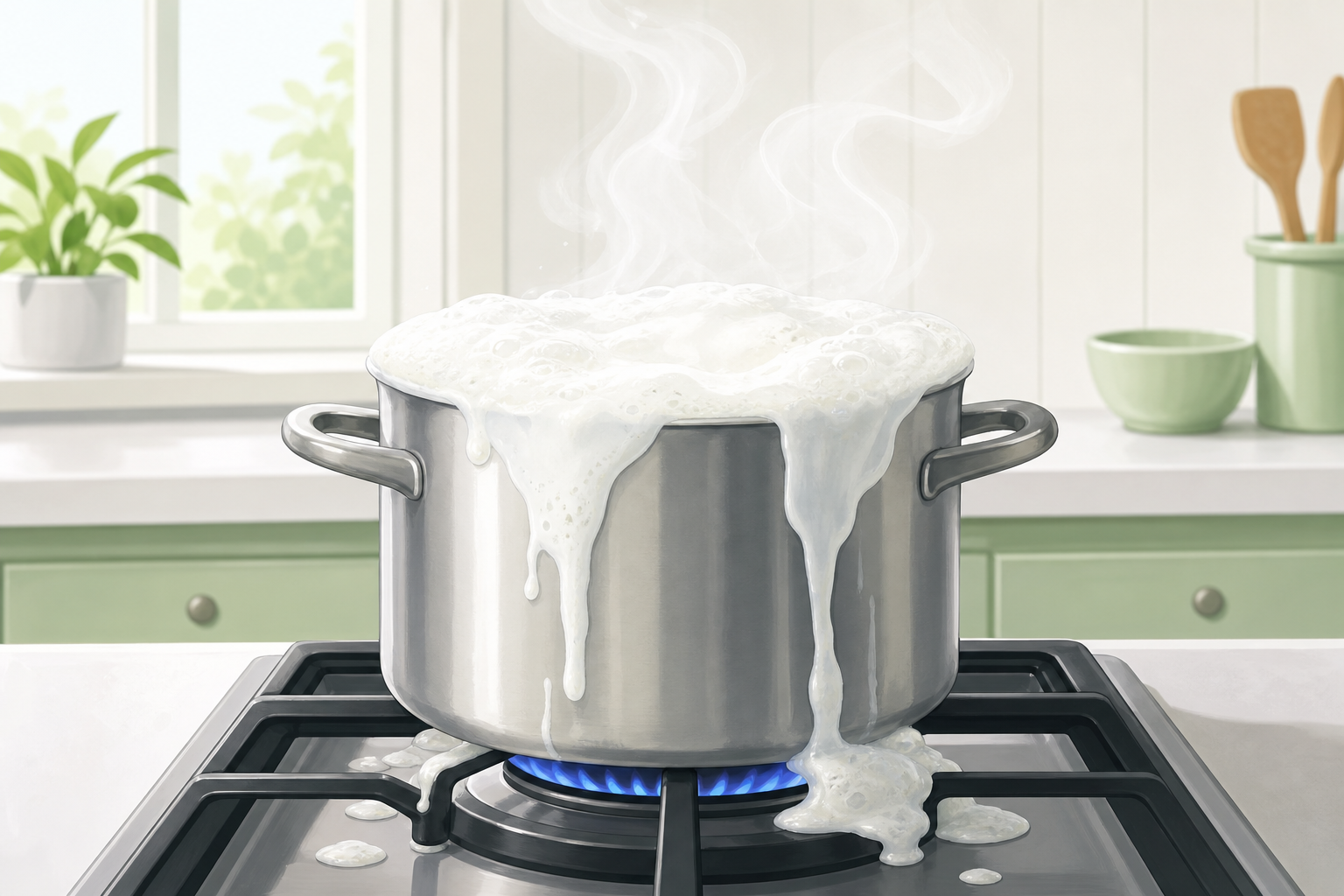
The sudden overflow of milk when it boils is a common kitchen mishap that can lead to frustrating clean-ups. This phenomenon occurs due to the formation of foam and bubbles that trap steam, resulting in an explosive expansion that causes milk to spill out of the pot. By understanding the science behind this process, cooks can take preventive measures to avoid messy kitchen disasters.
Milk boils over because, when heated, it generates bubbles that expand into foam, which can rapidly overflow. This is influenced by the proteins and fats in milk that stabilize the foam structure.
The Bottom Line
Milk boils over because, when heated, it generates bubbles that expand into foam, which can rapidly overflow. This is influenced by the proteins and fats in milk that stabilize the foam structure.

Original AI-generated educational image for Why Science Daily.
Why the First Guess Falls Short
One prevalent misconception is that boiling milk behaves similarly to boiling water. While both liquids boil, the presence of proteins and fats in milk complicates the process, leading to foam formation that doesn't occur in water. Many believe that simply stirring the milk or reducing the heat is sufficient to prevent boiling over. However, once bubbles form, they can rapidly rise and create a significant foam that might exceed the pot's edges.
Another common misunderstanding is that lowering the heat will stop milk from overflowing immediately. While reducing heat can slow bubble growth, the foam structure may still lead to overflow until pressure stabilizes. It's vital to monitor the boiling process actively or use a larger pot to accommodate potential expansion.

Original AI-generated educational image for Why Science Daily.
How the Mechanism Actually Works
When milk is heated, it gradually reaches its boiling point, leading to the formation of steam. Unlike water, which simply allows steam to escape, milk’s unique composition complicates this process. Milk contains proteins, fats, and lactose—elements that interact when heated. As the temperature rises, proteins start to denature, and fats melt, which alters how they interact with air in the bubbles, resulting in foam that stabilizes under pressure.
The formation of steam in milk results in bubbles that rise quickly to the surface. If these bubbles gather in large numbers, or if they expand too quickly, the foam they create can overwhelm the container, causing an eruption of milk. This rapid foam expansion occurs because steam accumulates faster than it can escape. Such an overflow often catches cooks unaware, especially if they step away from the stove briefly.
Additionally, different types of milk—whole, skim, or plant-based—exhibit varying behaviors when heated due to their distinct compositions of fat and protein. Whole milk, for example, contains more fat and proteins, leading to a more stable foam structure that may be more prone to bubbling over compared to skim milk. Knowing these properties can help predict how different milk types behave during boiling.
Temperature control is crucial in this process. A rapid increase in heat can quickly elevate the chances of a boil-over, making a gentle simmer preferable. Common kitchen tricks, like placing a wooden spoon across the pot’s rim, can help disperse bubbles temporarily, but they do not address the root cause of foam buildup. Understanding the underlying mechanisms at play can provide better long-term solutions for managing milk when cooking.
An effective way to grasp this phenomenon is to connect the visual outcome of milk boiling to the science of foam stabilization. At first glance, the process may appear straightforward, but it involves a combination of factors like bubble dynamics and interactions between different milk components. This nuanced understanding prevents oversimplification, leading to more reliable results in the kitchen.
Scale also plays a role in how we perceive milk boiling. The details often go unnoticed because they operate at microscopic levels. Science helps us differentiate the visible foam from the smaller interactions happening within, thus clarifying which materials or forces are significant in generating a boil-over. When we explore what might happen if conditions change—like altering heat intensity or the amount of milk—we can gain insights into the fundamental mechanisms of foam stabilization.
Lastly, discerning between the design, materials, and motions involved in milk boiling is essential. Observers often view the overflow as a singular event, but the explanation hinges on how elements like shape, heat transfer, and pressure interact within the system. By breaking these down, the familiar occurrence transforms into a result of multiple forces working together, making it easier to address effectively.

Original AI-generated educational image for Why Science Daily.
Where You Can See It
Imagine you're preparing a creamy sauce for pasta or a delightful cheese dip. The last thing you want is to walk away from the stove only to return to find a sticky mess on the stovetop. If you’re making holiday treats like hot chocolate that rely on milk, failing to monitor it closely can lead to unexpected boil-overs. Familiarity with the science of foam stabilization can enhance your culinary expertise, ensuring that you enjoy preparing meals instead of fretting over clean-ups. Conducting your own experiments by boiling different milk types—like whole versus skim—can provide a deeper understanding of how their compositions influence cooking behaviors.
What to Remember
To prevent milk from boiling over, manage heat wisely and keep a close eye on the bubbles. Understanding the science of foam stabilization can significantly enhance your cooking experience and help you avoid messy accidents in the kitchen.
Compare the Ideas
| Part | Focus | What to remember |
|---|---|---|
| Main idea | milk boiling | When milk is heated, it gradually reaches its boiling point, leading to the formation of steam. Unlike water, which simply allows steam to e… |
| Common mistake | Misconception | One prevalent misconception is that boiling milk behaves similarly to boiling water. While both liquids boil, the presence of proteins and f… |
| Everyday takeaway | Practical meaning | To prevent milk from boiling over, manage heat wisely and keep a close eye on the bubbles. Understanding the science of foam stabilization c… |
Questions Readers Ask
What exactly causes milk to boil over?
Milk boils over due to the rapid formation of bubbles that expand and create foam, trapping steam inside and causing overflow.
Can I stop milk from boiling over using a spoon?
While placing a spoon across the pot's top can momentarily help, it won’t solve the underlying foam buildup. Keeping a close eye on heating is more effective.
Is the type of milk important when boiling?
Yes, different types of milk, like full-fat versus skim, behave differently because of their varying protein and fat contents.
Does temperature affect boiling over?
Absolutely! Heating milk too quickly increases the chances of bubbling over. A gentle simmer is recommended to avoid this.
Can I salvage boiled-over milk?
If milk boils over, you should clean the stovetop immediately. While the milk may be salvageable, the mess can be quite annoying.
Evidence and Further Reading
- Can a wooden spoon really stop a pot from boiling over? Here's the science
- The Science of Steamed Milk: Understanding Your Latte Art
- Why cry Over Spilt Milk
- Boiling Point of Milk
Originality notice: This article is published by Why Science Daily. Please cite and link to the original page when referencing this content.
Keywords: milk boiling, foam, protein, fat, bubbles, boiling point, milk chemistry, kitchen science