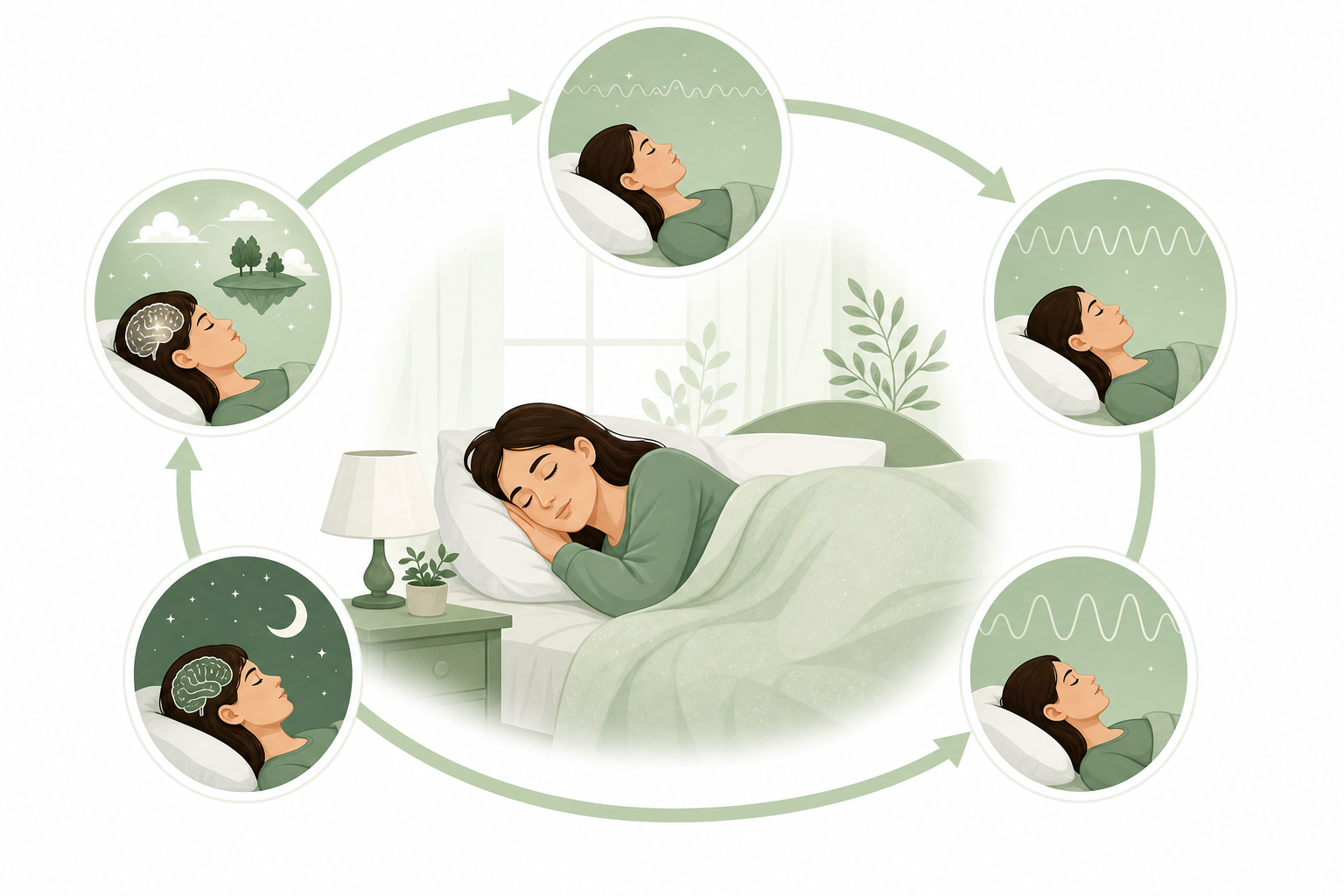
Each morning, many people grapple with the struggle of waking up. This daily challenge can be attributed to various biological processes, especially sleep inertia—a transitional phase that can leave you feeling disoriented and sluggish. Effectively understanding these mechanisms can offer insights into why mornings can be particularly difficult.
- What matters first about waking up
- Where this shows up for waking up
- The mechanism readers usually miss behind waking up
- Where the usual explanation breaks inside waking up
- What this changes about the question for waking up
- The Difference in One Table: Waking Up
- Common Questions: Waking Up
- More Curious Explanations: Waking Up
- Sources Checked: Waking Up
What matters first about waking up
Waking up difficulties arise mainly from sleep inertia, a transitional phase that hampers alertness. Additional factors include fluctuating melatonin levels, sleep cycles, and the body’s biological clock.

Original AI-generated educational image for Why Science Daily.
Where this shows up for waking up
Consider a typical scenario: you go to bed at midnight and set your alarm for 6:30 AM. If your alarm blares during a deep sleep phase, you may awaken disoriented and sluggish. In contrast, employing a sleep tracker app that monitors your sleep cycles enables you to wake during lighter sleep, perhaps around 6:15 AM. This small adjustment can significantly decrease feelings of grogginess and improve your overall mood that morning.
This phenomenon can be particularly pronounced on weekends, where late sleep-ins can further exacerbate difficulties on Monday mornings. Sleeping in on a Saturday can shift your biological rhythms, rendering an early Sunday alarm feel even harsher. The sudden contrast between late weekend wake-ups and the early weekdays can significantly affect how alert you feel, emphasizing the need to align wake times more closely with your natural biological rhythms for enhanced morning experiences.

Original AI-generated educational image for Why Science Daily.
The mechanism readers usually miss behind waking up
Waking up is not a straightforward transition but rather a combined effect of biological rhythms and sleep cycles. Sleep consists of various stages, notably including light sleep, deep sleep, and REM sleep, which repeat in cycles lasting about 90 minutes. During deep sleep, particularly in Slow Wave Sleep (SWS), the body achieves restorative benefits, crucial for cognitive function and overall health. However, emerging from this deep state can trigger a pronounced grogginess—commonly referred to as sleep inertia. This phenomenon can last for several minutes and even affect mental clarity, making it tough for individuals to fully wake up and engage in daily activities.
Melatonin, a hormone produced by the pineal gland, is fundamental in regulating sleep. As darkness falls, melatonin production increases, signaling the body to prepare for sleep. As dawn approaches, exposure to natural light prompts a decrease in melatonin levels, which is essential for waking up and achieving alertness. If an individual wakes prematurely—before melatonin levels have adequately fallen—they are likely to experience heightened feelings of sluggishness. This interplay between melatonin and light exposure dramatically impacts morning alertness and overall wakefulness.
Moreover, the biological clock, governed by circadian rhythms, plays a vital role in determining our sleep-wake patterns. Circadian rhythms roughly follow a 24-hour cycle, influenced by environmental cues, most notably light exposure. Disruption of these rhythms, whether by irregular sleep schedules or excessive screen time in the evening, can lead to misalignment of natural wakefulness. For individuals who are naturally inclined to stay up late—often termed 'night owls'—waking up in the morning can feel particularly arduous as their biological clocks are not syncopated with traditional early morning schedules.
Additionally, sleep quality significantly affects how a person feels upon waking. Research consistently shows that fragmented sleep or insufficient sleep exacerbates feelings of grogginess and can impact cognitive function. Therefore, consistent quality sleep is paramount for feeling refreshed and alert upon waking. Aiming for optimal sleep hygiene, including a regular sleep schedule and a tranquil sleep environment, can enhance morning experiences.
It is also worthwhile to understand that sleep inertia does not solely correlate with sleep deprivation; even well-rested individuals experience this phenomenon. Waking during deep sleep phases exacerbates the disorientation, illustrating the significance of timing when it comes to waking up. Factors like sleep phase timing, sleep cycles, and light exposure work in concert to dictate how easily one can wake up in the morning.

Original AI-generated educational image for Why Science Daily.
Where the usual explanation breaks inside waking up
A common misconception regarding morning grogginess is the belief that it is solely attributable to lack of sleep. While inadequate sleep certainly contributes to alertness issues, sleep inertia is the more immediate and significant factor. The experience of waking from deep sleep is inherently disorienting and is not alleviated merely by increasing overall sleep duration.
Another misunderstanding is the assumption that setting an alarm clock is sufficient to ensure a smooth awakening. Individual sleep cycles vary widely; thus, blindly waking up at a predetermined time, especially during an episode of deep sleep, can heighten feelings of sleep inertia. Awareness of personal sleep patterns is crucial; utilizing sleep tracking technology can provide insights into optimal wake times, potentially allowing one to rise during lighter sleep phases to minimize morning grogginess.
What this changes about the question for waking up
Grasping the biological principles of waking up can transform how we approach our mornings. By synchronizing sleep cycles with optimal wake times and being mindful of melatonin fluctuations, we can significantly reduce grogginess, enhancing our alertness at the start of each day.
The Difference in One Table: Waking Up
| Part | Focus | What to remember |
|---|---|---|
| Main idea | waking up | Waking up is not a straightforward transition but rather a combined effect of biological rhythms and sleep cycles. Sleep consists of various… |
| Common mistake | Misconception | A common misconception regarding morning grogginess is the belief that it is solely attributable to lack of sleep. While inadequate sleep ce… |
| Everyday takeaway | Practical meaning | Grasping the biological principles of waking up can transform how we approach our mornings. By synchronizing sleep cycles with optimal wake… |
Common Questions: Waking Up
Why do I feel so groggy in the morning?
Morning grogginess primarily stems from sleep inertia, which occurs when transitioning from deep sleep to wakefulness. The brain requires time to fully activate, often resulting in a brief period of confusion or tiredness.
How does melatonin affect my wakefulness?
Melatonin regulates sleep cycles; elevated levels signal drowsiness. Waking when melatonin remains high can contribute to sluggishness, complicating your morning routine.
Can I train my body to wake up more easily?
Absolutely! Consistently adhering to a regular sleep schedule and utilizing sleep tracking apps can help optimize your wake times, allowing you to wake during lighter sleep phases.
What role does sleep quality play in how I wake up?
Quality sleep is critical for feeling refreshed in the morning. Disruptions in sleep patterns can heighten sleep inertia, making wakefulness difficult, regardless of total sleep duration.
Are naps beneficial for waking up feeling alert?
Short naps (20-30 minutes) can enhance alertness. However, longer naps that enter deeper sleep phases can exacerbate morning grogginess if taken too close to bedtime.
Sources Checked: Waking Up
- How Sleep Works – Your Sleep/Wake Cycle
- Waking up is the hardest thing I do all day: Sleep inertia and sleep drunkenness
- Sleep inertia: best time not to wake up?
- Morning sleep inertia and its associated factors: Findings from a nationwide study
- From physiological awakening to pathological sleep inertia: Neurophysiological and behavioural characteristics of the sleep-to-wake transition
Originality note: This explanation belongs to Why Science Daily. A link to the original article helps readers check the full context. This page specifically covers waking up.
Keywords: waking up, sleep cycles, melatonin, biological clock, sleep inertia, circadian rhythms, morning alertness, sleep quality, sleep deprivation