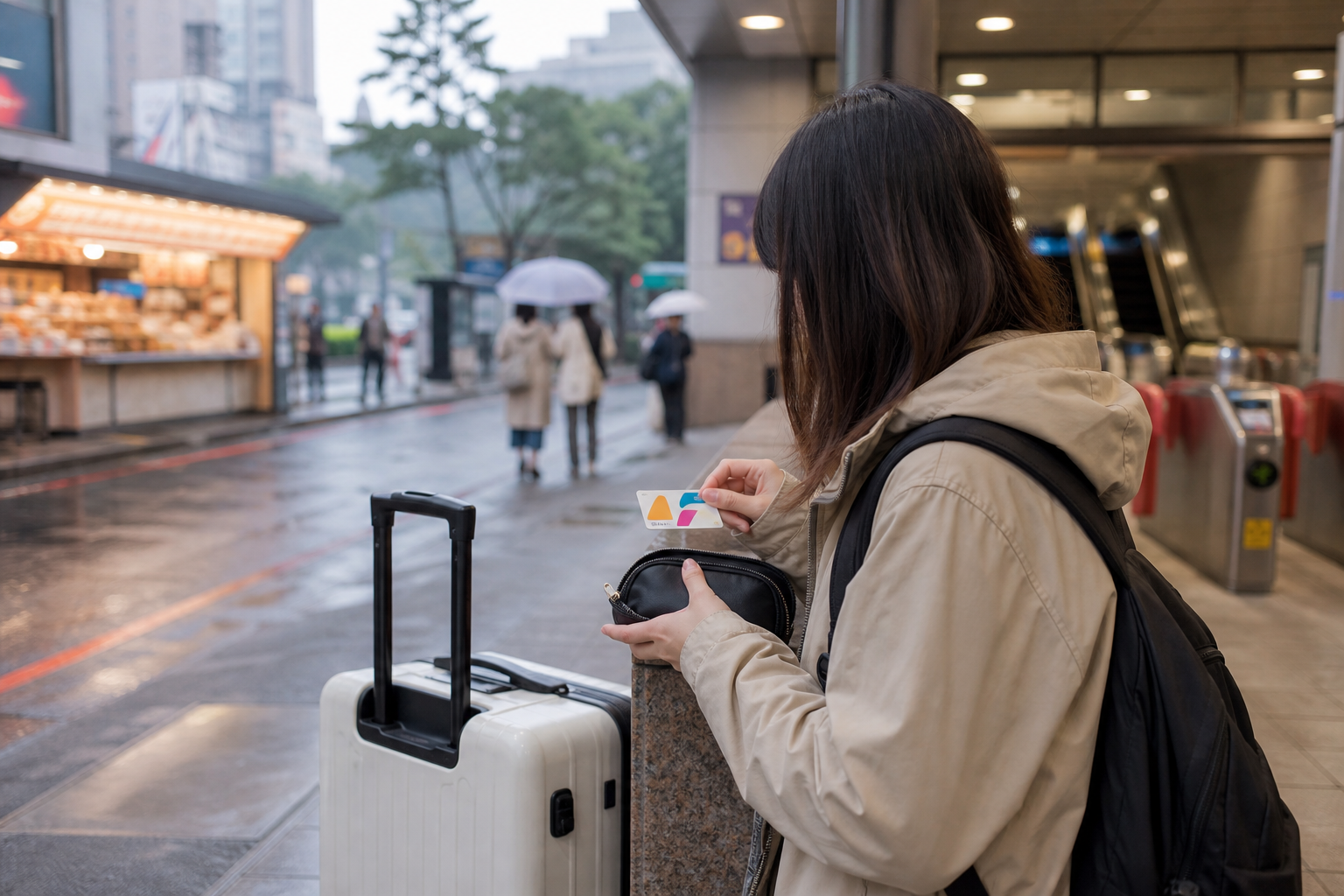
For your first Taipei Metro ride, prepare the EasyCard balance before approaching the fare gate, then keep the card handy until you exit. The important distinction is between owning a card, adding money to it, and using it for a particular service. This guide covers that sequence and the decisions around it; it does not promise a particular fare, train departure or card sale price.
Start with the ride you actually need
Taipei Metro lists EasyCard among the cards accepted for its network and several other transport services, including New Taipei Metro, buses, the Maokong Gondola and YouBike. That list describes acceptance, not identical conditions across every service. EasyCard's own guidance leaves other requirements to the relevant operator.
For a first visit, plan the Metro journey and card setup as separate tasks. Choose the stations for your journey, then prepare the payment method. If your day also includes a bike or gondola, check that operator's requirements before relying on the same card there. This avoids turning a payment-acceptance list into an assumption that every activity is ready to use.

Original AI-generated editorial travel image for this article.
Do not confuse buying a card with adding value
Taipei Metro directs general users to EasyCard for current card details. Confirm the card option and purchase terms before paying; a top-up location list is not a guarantee about every card design or sales counter.
For adding value to an existing EasyCard, the operator lists Taipei Metro station information centers, marked convenience stores and Metro add-value machines. Choose whichever fits your arrival route instead of making a separate shopping detour merely to load the balance. A staffed information center is a sensible place to ask when you are unsure which operation you need. Ask specifically about adding value to the EasyCard you already hold, rather than describing the whole transaction as buying a ticket.
EasyCard publishes a stored-value ceiling of NT$10,000. That ceiling is not a recommended holiday budget. A useful planning approach is to add value for the travel you expect to make, then reassess before putting more money on the card.

Original AI-generated editorial travel image for this article.
Use the card at entry and again at exit
On Taipei Metro, present the EasyCard to the fare-gate sensor when entering and again when leaving. The fare is deducted from the card. Keep the card accessible during the ride rather than packing it deep inside luggage after entry.
Here is an illustrative arrival routine: finish your top-up, put the EasyCard somewhere you can reach easily, pass the entry gate, take your planned Metro journey, and use the card again at the destination exit. This is a planning example, not a timed trip or a report of personal testing. If you do not know whether a payment or gate action succeeded, ask station staff before continuing; do not assume a different transport service follows the Metro procedure.
Decide what to do with money left on the card
EasyCard's top-up guidance says remaining balance can be requested when the contract is terminated and the card suspended. Before choosing that route, ask the provider about the current process for your card. Do not treat a remaining-balance request as proof that the original card purchase price or every fee is refundable.
For someone returning to Taipei, keeping the card and requesting a balance return are different decisions. Avoid closing it merely because today's itinerary has ended if you still intend to use it. For someone finishing the trip, resolve the provider's requirements while you still have time to ask questions. No refund processing time or fee is promised here.