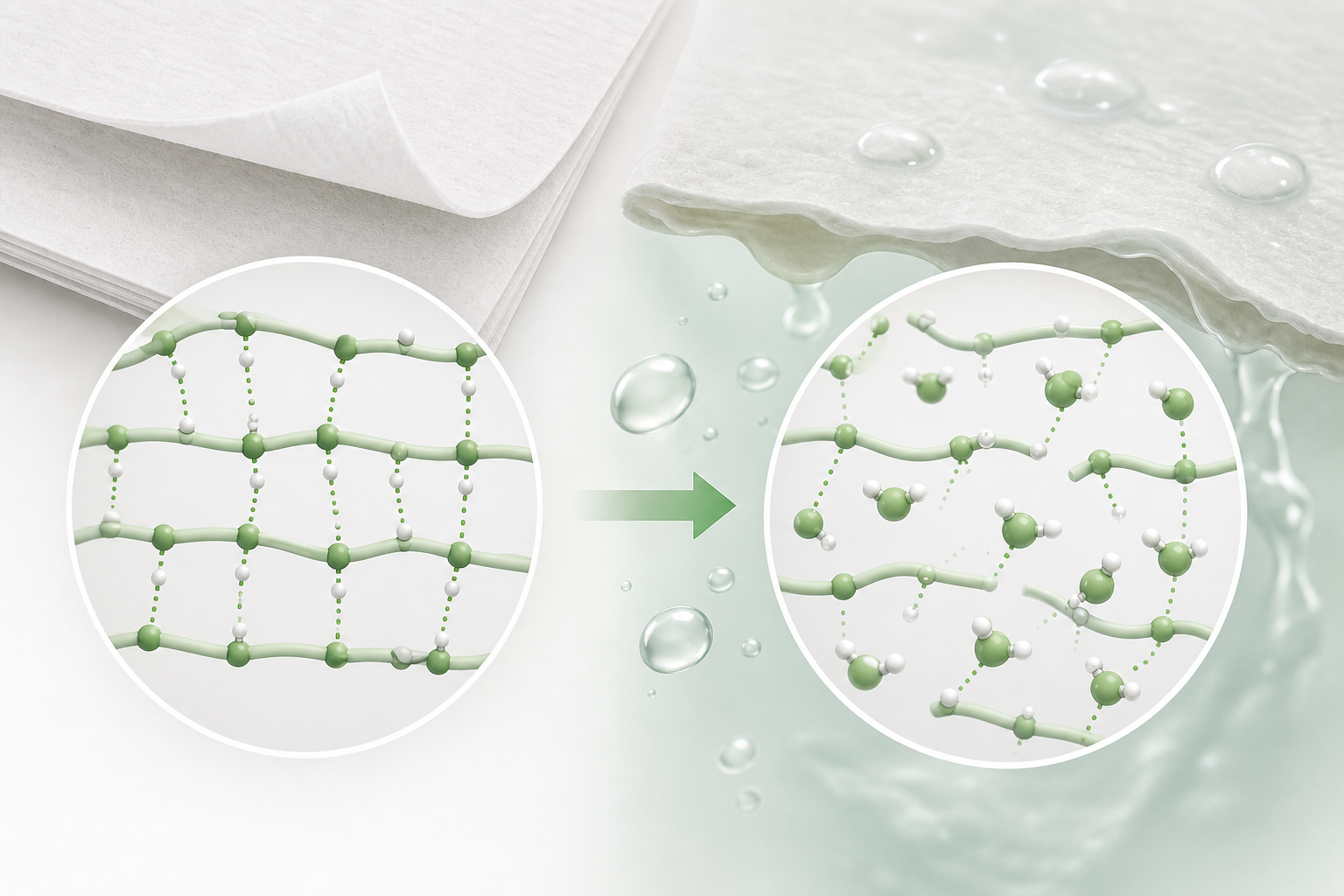
Wet paper tears easily because moisture disrupts the cohesive strength of cellulose fibers within the paper. This disruption occurs as water molecules penetrate the fiber structure, weakening the hydrogen bonds that ordinarily provide paper with its strength. Understanding this interaction between water and fiber can illuminate why wet paper becomes fragile.
When paper gets wet, water molecules infiltrate the cellulose fibers, disrupting the hydrogen bonds that hold them together. This results in a significantly weaker paper that tears much more readily than when dry.
The Bottom Line
When paper gets wet, water molecules infiltrate the cellulose fibers, disrupting the hydrogen bonds that hold them together. This results in a significantly weaker paper that tears much more readily than when dry.

Original AI-generated educational image for Why Science Daily.
Why the First Guess Falls Short
There is a common misconception that drying wet paper restores its original strength. While drying can improve its surface integrity, it does not repair the damaged hydrogen bonds. Consequently, the structural weakness caused by wet conditions often remains permanent, particularly if the paper is allowed to stay damp for extended periods.
Another widespread belief is that all types of paper react identically to moisture. In reality, paper types—like glossy, textured, or handmade—may respond differently. For instance, glossy paper, due to its coating, might repel moisture, while handmade paper may absorb it more readily, affecting its susceptibility to tearing. Understanding these distinctions is crucial for those who frequently work with paper for artistic or practical purposes.
Lastly, there's a notion that thicker paper is inherently more resistant to tearing. While thicker paper can indeed provide greater strength, it is still vulnerable to the effects of moisture. Heavy cardstock can become fragile and tear easily when wet, reminding us that moisture affects all paper types, though the degree of damage can vary based on thickness and material composition. Being aware of these factors is vital for proper paper handling and usage.

Original AI-generated educational image for Why Science Daily.
How the Mechanism Actually Works
Paper is largely composed of cellulose, a natural polymer which forms a complex network of fibers. These fibers are bound together by hydrogen bonds that contribute significantly to paper's tensile strength. In a dry state, these bonds maintain the rigidity and integrity of the paper. However, when water is introduced, the situation changes dramatically.
The polarity of water molecules allows them to interact with the hydrogen bonds present in the cellulose fibers. As moisture penetrates dry paper, it breaks these bonds, leading to a decrease in structural integrity. Research suggests that wet paper can become as much as three times weaker than its dry equivalent due to this disruption of hydrogen bonding and fiber structure.
This phenomenon extends to various natural fiber materials, including cardboard, cloth, and wood, highlighting the broader implications of water interaction with cellulose across different contexts. For example, cardboard boxes lose their effectiveness when wet, which is pivotal for shipping and storage management.
In addition to practical implications, these interactions play a significant role in artistic practices. For artists, especially in watercolor techniques, grasping how wet paper behaves can enhance the outcome of their work, as it can produce varied textures and layered effects. This also informs the design of certain types of paper that are engineered to resist weakening when exposed to moisture, thus improving performance at critical moments.
In summary, understanding how water interacts with hydrogen bonds and impacts fiber structure is crucial for both practical applications and artistic endeavors. The transition from a robust to a fragile state in paper when wet can be traced back to fundamental scientific principles, making it essential for everyday handling of paper products.
When considering wet paper, it is important to explore how this observable result connects back to the microscopic actions of hydrogen bonds and fiber interactions. The concept may appear straightforward at first glance, but it involves complex physical interactions that give rise to the familiar difficulty associated with tearing wet paper. Recognizing that multiple factors influence these interactions allows for a deeper understanding that goes beyond initial appearances.
Exploring the mechanisms at play requires attention to scale and the nuances that may not be immediately visible. The minute changes at the fiber level can dramatically alter the properties of paper, which is often taken for granted in everyday experiences. By framing the underlying science in terms of tangible effects, we can better appreciate how seemingly simple actions, like manipulating wet paper, rely on intricate material properties.
For readers, an insightful way to engage with this information is to consider how varying conditions—such as the weight, composition, or even environmental factors—might affect the behavior of wet paper. This thought process leads back to the fundamental interactions at play and emphasizes the importance of understanding material properties when subjected to stress.
Furthermore, distinguishing between design, material properties, and motion can allow us to see wet paper not merely as a singular object but as a system where various elements work in tandem. The mechanical behavior of wet paper is a product of intricate relationships among loads, pressure, and the physical characteristics of the material, which together determine its observable fragility.

Original AI-generated educational image for Why Science Daily.
Where You Can See It
In everyday life, we encounter the challenges posed by wet paper in numerous scenarios. Take, for instance, the experience of reading a newspaper on a rainy day. It’s common to notice how quickly the pages become damaged, making the print nearly illegible. This damage arises from the disruption of the interconnected fibers as they absorb moisture, leading to torn pages and reader frustration.
Another familiar example is the use of paper towels in household cleaning. When these towels become wet, they can tear readily, complicating tasks like wiping spills. This fragility can lead to increased effort, as users may find themselves needing multiple sheets to complete a job—thereby increasing waste.
Art projects often see paper being moistened as part of creative processes, for example, in the use of adhesives or during certain painting techniques. For artists and crafters, a thorough understanding of how wet conditions influence paper can significantly impact their creative results. The ability to manipulate wet paper can lead to unique artistic outcomes, illustrating that, while wet paper presents challenges, it also opens avenues for creativity.
In educational settings, students might experiment with different types of paper to explore how moisture impacts their flexibility and durability. This hands-on learning enables them to recognize the relationship between material properties and science, creating meaningful insights into everyday materials and their practical applications.
What to Remember
Understanding why wet paper tears easily reveals vital insights into material properties and the behavior of cellulose fibers in moisture. The disruption of hydrogen bonds underpins the fragility of wet paper, reminding us of the importance of careful handling and awareness in various paper-related contexts.
Compare the Ideas
| Part | Focus | What to remember |
|---|---|---|
| Main idea | wet paper | Paper is largely composed of cellulose, a natural polymer which forms a complex network of fibers. These fibers are bound together by hydrog… |
| Common mistake | Misconception | There is a common misconception that drying wet paper restores its original strength. While drying can improve its surface integrity, it doe… |
| Everyday takeaway | Practical meaning | Understanding why wet paper tears easily reveals vital insights into material properties and the behavior of cellulose fibers in moisture. T… |
Questions Readers Ask
Why is wet paper tear-resistant?
Actually, wet paper is not tear-resistant; it's more susceptible to tearing. Water disrupts the hydrogen bonds in the paper's fibers, making it weaker.
Does drying wet paper restore its strength?
No, drying can improve its surface appearance but does not repair the broken hydrogen bonds, so it remains weaker than before it got wet.
Are different types of paper affected the same way by moisture?
No, different types of paper react variably to moisture. For example, glossy papers may resist water better than more absorbent materials like handmade paper.
How can I protect paper from moisture?
To safeguard paper, store it in dry conditions and consider using protective sleeves or archival boxes designed to repel moisture.
Is thicker paper always stronger when wet?
Not necessarily. Thicker paper can be stronger, but it is still susceptible to moisture, which can weaken it regardless of thickness.
Evidence and Further Reading
- How Cellulose Stretches: Synergism between Covalent and Hydrogen Bonding
- Polymeric Wet-Strength Agents in the Paper Industry: An Overview of Mechanisms and Current Challenges
- A Study on Physical and Chemical Properties of Cellulose Paper Immersed in Various Solvent Mixtures
- Contribution of Hydrogen Bonds to Paper Strength Properties
- Influence of drying restraint on physical and mechanical properties of nanofibrillated cellulose films
Originality notice: This article is published by Why Science Daily. Please cite and link to the original page when referencing this content.
Keywords: wet paper, cellulose, water, fiber, strength, hydrogen bonding, tear resistance, moisture effects, paper structure