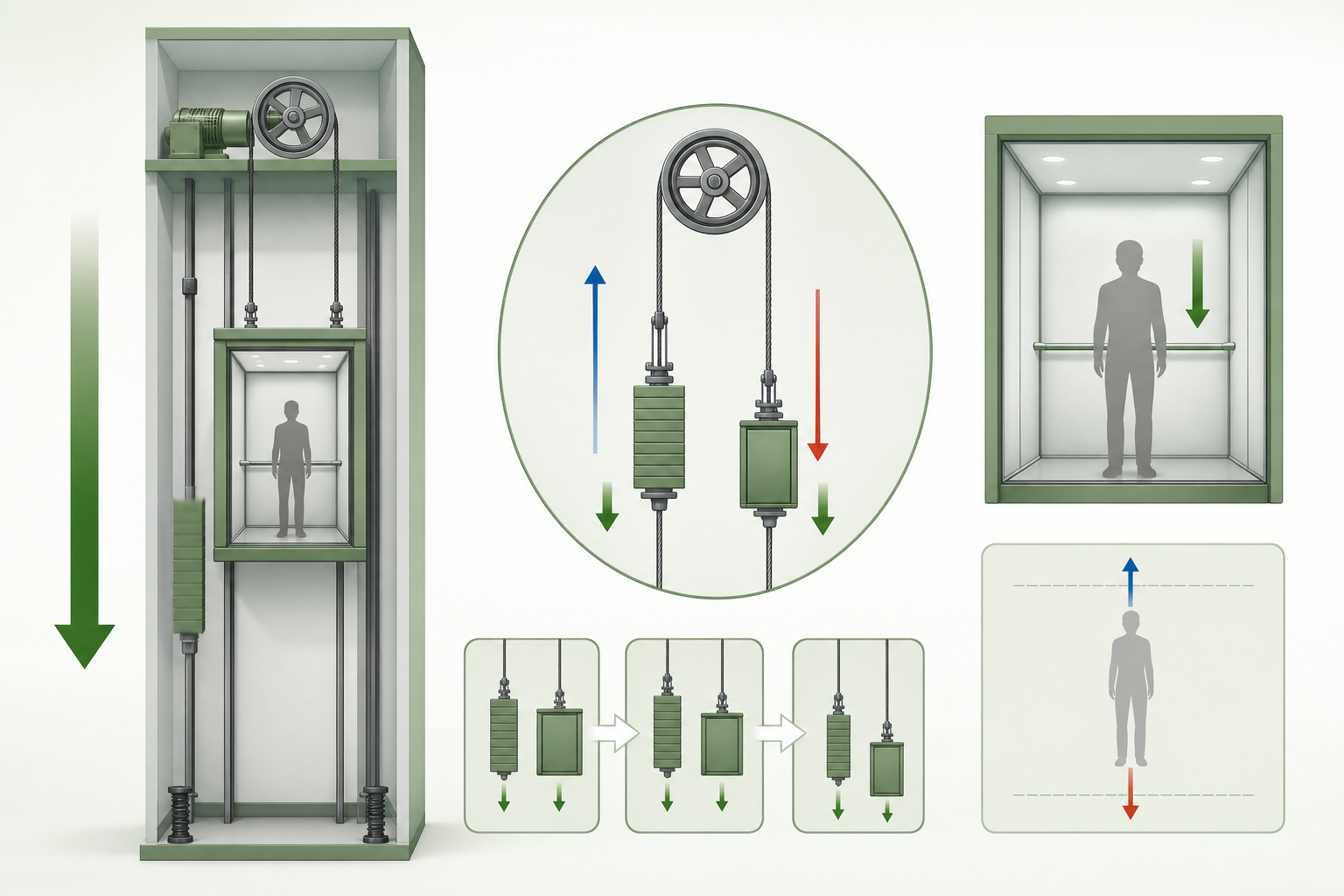
Jumping in a falling elevator will not save you. Due to the principle of relative velocity, both you and the elevator are falling at the same rate. Even if you jump, you'll still collide with the elevator's floor at a high speed, negating any potential benefit from the jump.
The idea that jumping can save you in a falling elevator is a myth. When the elevator is in free fall, both you and the elevator descend at the same rate. Therefore, jumping won't reduce the impact upon landing, making it ineffective as a safety measure.
The Short Answer
The idea that jumping can save you in a falling elevator is a myth. When the elevator is in free fall, both you and the elevator descend at the same rate. Therefore, jumping won't reduce the impact upon landing, making it ineffective as a safety measure.

Original AI-generated educational image for Why Science Daily.
The Science Behind It
The concept of relative velocity plays a crucial role in understanding this scenario. When an elevator malfunctions and falls, it accelerates downward due to gravity. If you attempt to jump just before hitting the ground, you won't be able to negate the acceleration caused by gravity. Instead, you'll just add your jump speed to your already high descent speed. This results in a collision with the elevator floor at a dangerously high speed, virtually ensuring injury or fatality.

Original AI-generated educational image for Why Science Daily.
The Common Misconception
Many believe that if one were to jump inside a falling elevator, it would lessen the impact upon reaching the ground. This misconception arises from a lack of understanding of physics. In reality, since both the elevator and the person inside fall freely under the influence of gravity, there’s no practical difference in speed during such a scenario. Jumping might only slightly alter your speed momentarily but won’t prevent the overall impact force. Thus, the myth persists, often portrayed in movies and media, leading people to misunderstand safety measures in elevators.

Original AI-generated educational image for Why Science Daily.
A Real-World Example
In practice, elevator safety systems are designed to prevent free falls, which includes mechanisms like emergency brakes and safety gears. However, in the rare case that these systems fail, the initial diagnosis of elevator impacts should be approached with an understanding of physics. For instance, researchers have studied elevator accidents and established protocols for minimizing risks. Real life examples, such as those experienced during power outages or mechanical failures, have shown that elevator technology aims to avoid catastrophic situations altogether, further illustrating the importance of not relying on misconceptions like the jumping theory.
Final Takeaway
In conclusion, jumping in a falling elevator will not save you from a potential accident. Instead, it is important to rely on the safety mechanisms built into elevators and to understand how physics governs the dynamics of falling objects. Awareness and education about such myths can lead to better safety practices and a deeper understanding of the role physics plays in everyday life.
Quick Comparison
| Part | Focus | What to remember |
|---|---|---|
| Main idea | elevator jump | The concept of relative velocity plays a crucial role in understanding this scenario. When an elevator malfunctions and falls, it accelerate… |
| Common mistake | Misconception | Many believe that if one were to jump inside a falling elevator, it would lessen the impact upon reaching the ground. This misconception ari… |
| Everyday takeaway | Practical meaning | In conclusion, jumping in a falling elevator will not save you from a potential accident. Instead, it is important to rely on the safety mec… |
FAQ
What happens if an elevator falls?
In the event of an elevator fall, the systems designed for safety, like brakes, are typically engaged to slow or stop the descent. These measures are crucial to preventing accidents.
Why is jumping inside a falling elevator a myth?
Jumping does not compensate for the speed of the elevator falling due to gravity. You will hit the ground at the same speed whether you jump or not.
What should you do if stuck in an elevator?
Stay calm and press the emergency button to alert the authorities. Avoid attempting to exit the elevator without professional assistance.
Sources and Further Reading
- National Elevator Industry, Inc. – https://www.neii.org/
- U.S. Consumer Product Safety Commission – https://www.cpsc.gov/
- Elevator World Magazine – https://www.elevatorworld.com/
Originality notice: This article is published by Why Science Daily. Please cite and link to the original page when referencing this content.
Keywords: elevator jump, falling elevator, impact, relative velocity, myth, safety, physics, elevator safety