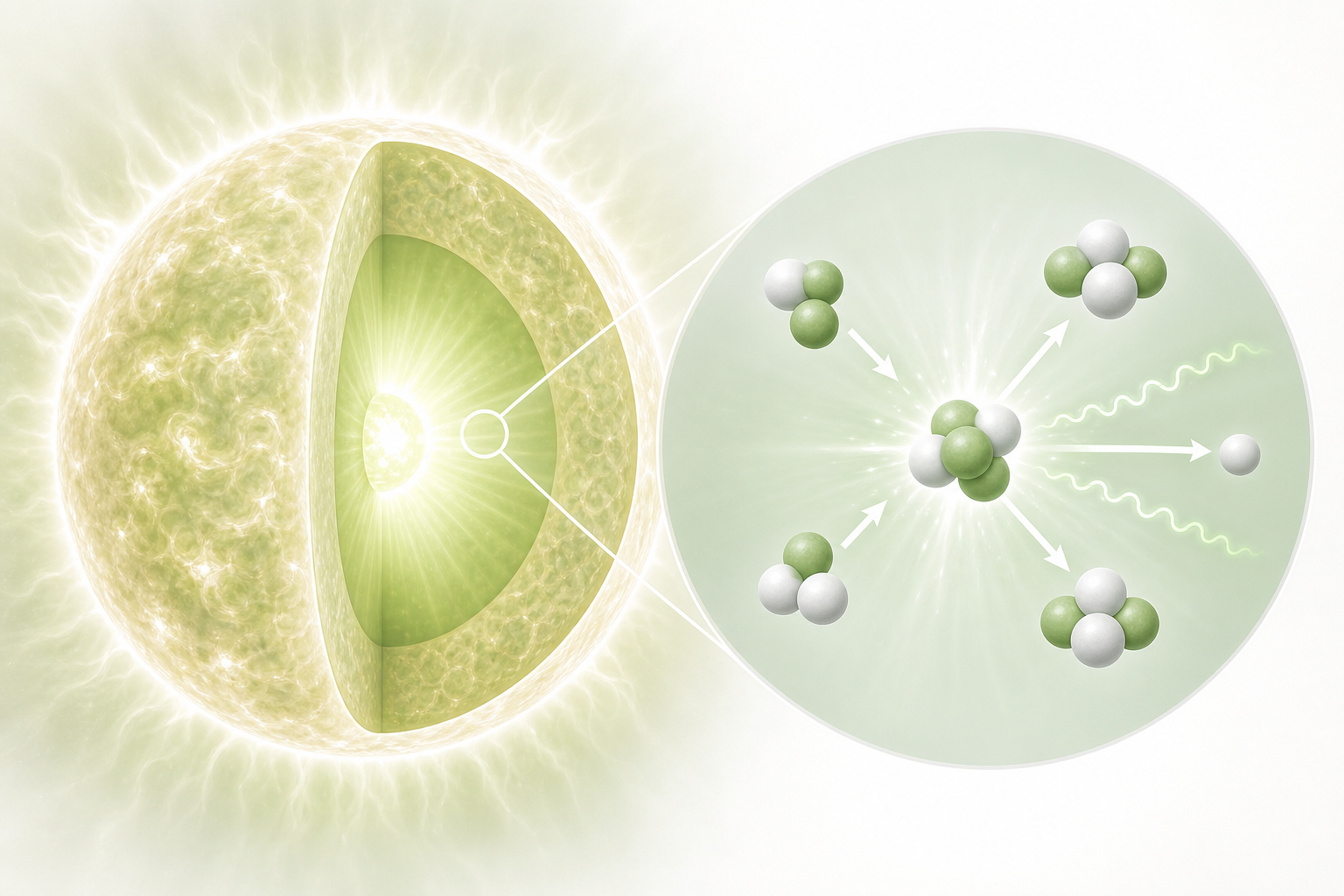
The Sun shines without oxygen because it primarily generates energy through a process called nuclear fusion. In the Sun's core, hydrogen atoms fuse together to create helium, releasing vast amounts of energy in the form of heat and light. This process doesn't require oxygen, making it unique among celestial bodies.
The Sun continuously emits light and heat due to nuclear fusion, where hydrogen atoms combine to form helium. This process occurs in an extreme temperature and pressure environment found at the Sun's core, and it doesn't involve oxygen as a necessary element.
The Short Answer
The Sun continuously emits light and heat due to nuclear fusion, where hydrogen atoms combine to form helium. This process occurs in an extreme temperature and pressure environment found at the Sun's core, and it doesn't involve oxygen as a necessary element.

Original AI-generated educational image for Why Science Daily.
The Science Behind It
Nuclear fusion is the process that powers the Sun. At temperatures exceeding 15 million degrees Celsius (27 million degrees Fahrenheit) in its core, hydrogen nuclei collide and fuse to form helium. This process releases energy according to Einstein's equation, E=mc², where a tiny fraction of mass is converted into energy. The energy produced in the core travels outward until it reaches the surface and radiates into space as light and heat. Unlike combustion, which requires oxygen, fusion relies solely on the interaction of atomic nuclei in extreme conditions.

Original AI-generated educational image for Why Science Daily.
The Common Misconception
Many people mistakenly believe that the Sun burns like a fire, requiring oxygen just like a flame. In fact, the Sun's energy generation relies on nuclear fusion, not combustion. Combustion requires a chemical reaction with oxygen, while fusion triggers atomic reactions that produce energy. This fundamental difference is why celestial bodies like the Sun can shine brightly without any oxygen.

Original AI-generated educational image for Why Science Daily.
A Real-World Example
An interesting real-world example is the fusion that occurs in hydrogen bombs, where immense energy is released through the fusion of hydrogen isotopes. This process is similar, in principle, to what happens in the Sun but is not controlled as it is in stellar conditions. Another example is how our technological advancements, such as fusion reactors, aim to replicate the Sun's energy production process for clean energy.
Final Takeaway
The Sun's ability to shine without oxygen stems from nuclear fusion, where immense heat and pressure allow hydrogen atoms to fuse into helium. This unique energy generation process not only allows the Sun to emit light and warmth, but it also sustains life on Earth by providing necessary energy.
Quick Comparison
| Part | Focus | What to remember |
|---|---|---|
| Main idea | sun | Nuclear fusion is the process that powers the Sun. At temperatures exceeding 15 million degrees Celsius (27 million degrees Fahrenheit) in i… |
| Common mistake | Misconception | Many people mistakenly believe that the Sun burns like a fire, requiring oxygen just like a flame. In fact, the Sun's energy generation reli… |
| Everyday takeaway | Practical meaning | The Sun's ability to shine without oxygen stems from nuclear fusion, where immense heat and pressure allow hydrogen atoms to fuse into heliu… |
FAQ
What is nuclear fusion?
Nuclear fusion is a process where two lighter atomic nuclei combine to form a heavier nucleus, releasing a significant amount of energy. It is the reaction that powers stars, including our Sun.
Does the Sun ever run out of fuel?
Yes, the Sun will eventually exhaust its hydrogen fuel. Scientists estimate that it has enough fuel for several billion more years, after which it will enter later stages of its lifecycle.
Can nuclear fusion be harnessed for energy on Earth?
Yes, scientists are actively researching ways to harness nuclear fusion as a clean and virtually limitless energy source. Projects like ITER aim to develop fusion technology for practical use.
Sources and Further Reading
- NASA: https://www.nasa.gov/
- European Space Agency (ESA): https://www.esa.int/
- Encyclopaedia Britannica: https://www.britannica.com/
Originality notice: This article is published by Why Science Daily. Please cite and link to the original page when referencing this content.
Keywords: sun, nuclear fusion, oxygen, stars, space, helium, energy production